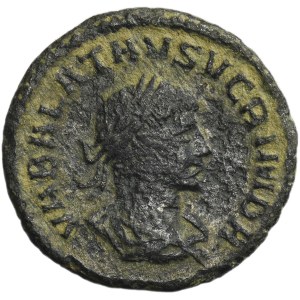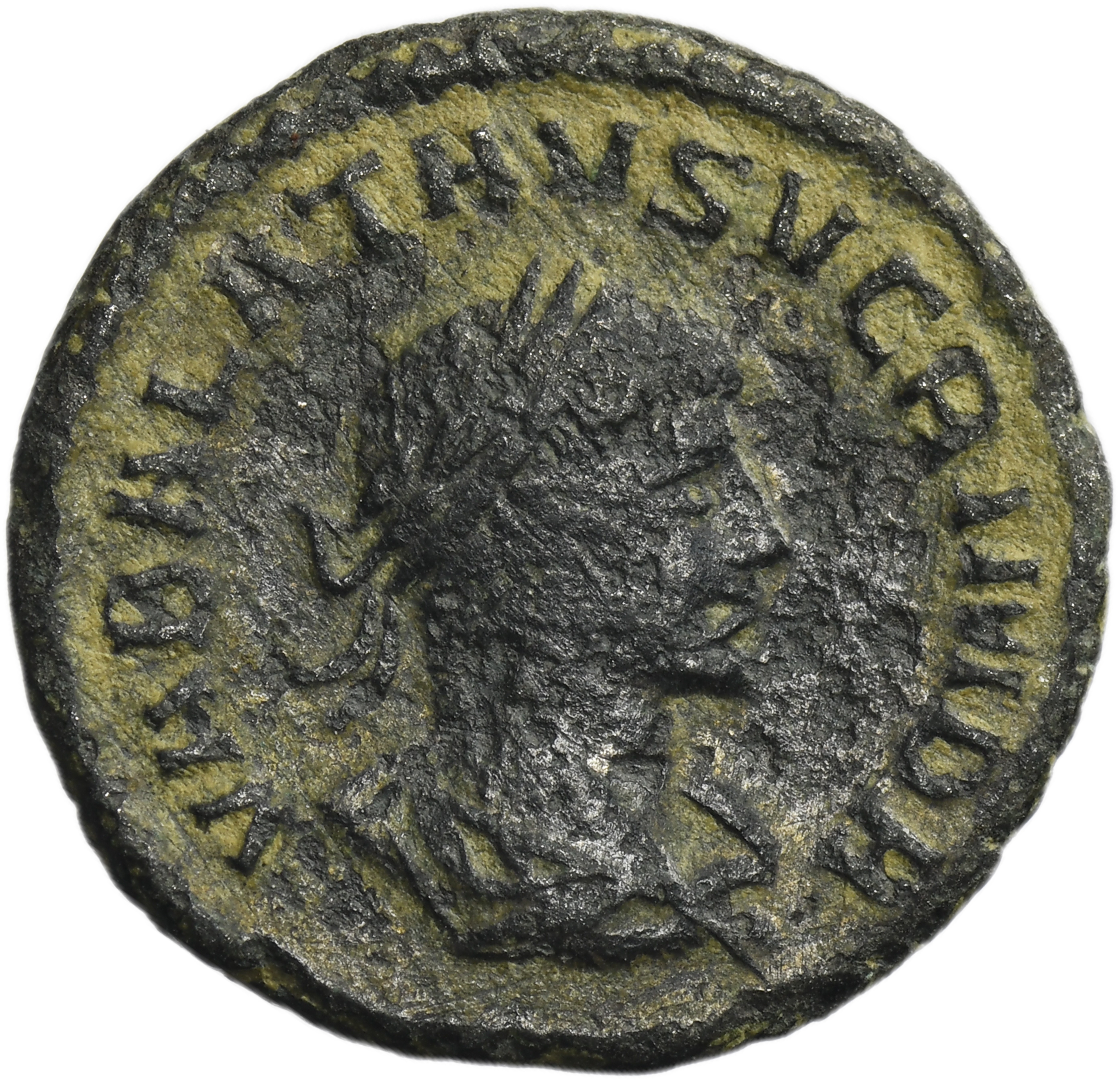
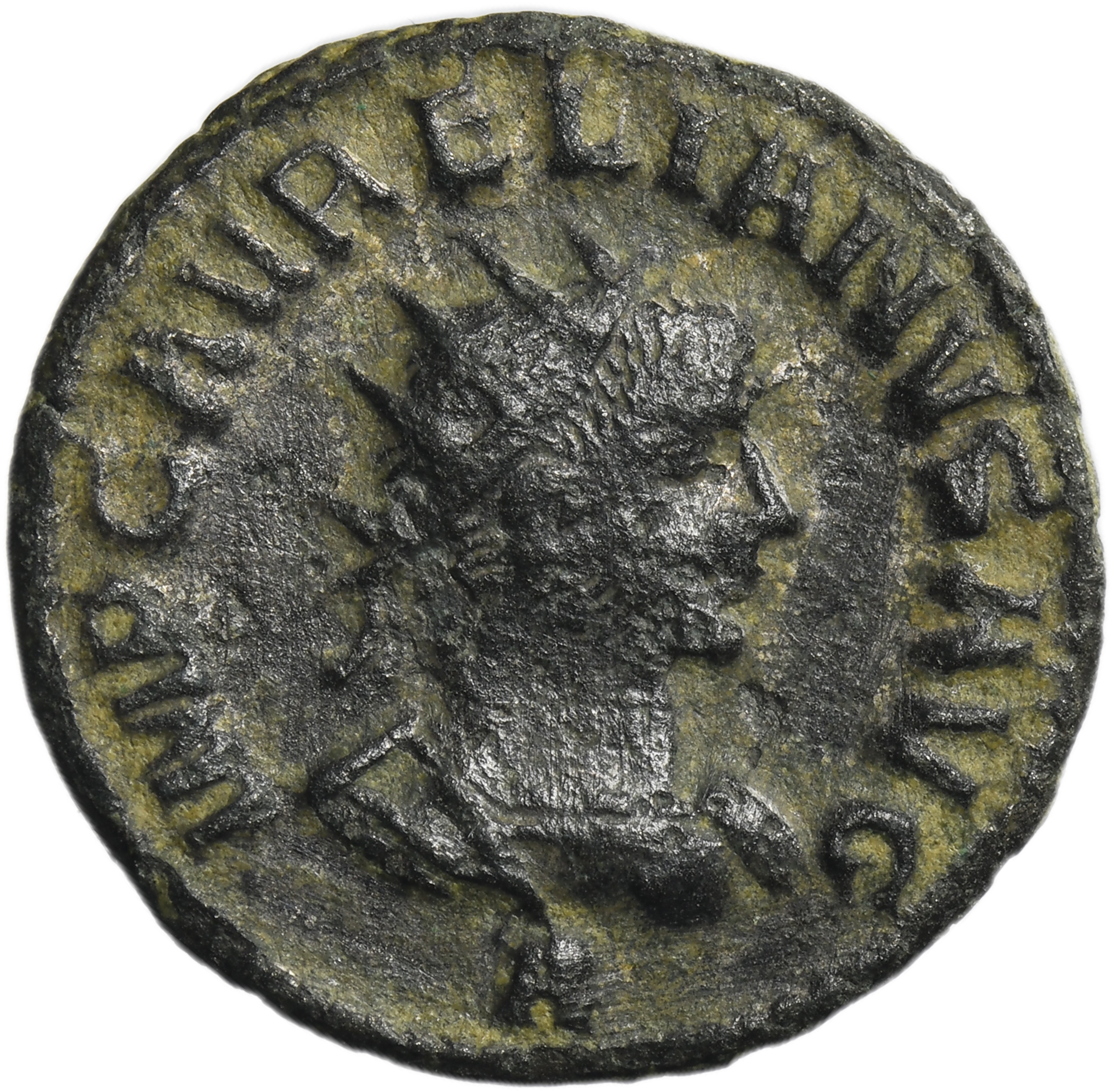


Antoninianus from the period of joint rule of Aurelian and Vaballathus (AD 270–272), struck at the Antioch mint, belonging to a highly interesting series associated with the Palmyrene Empire during the early phase of Aurelian’s reign. Coins of this type constitute exceptional evidence of the complex political situation in the eastern provinces, where Roman supremacy was formally acknowledged while substantial autonomy was retained.
The obverse features a laureate, draped and cuirassed bust of Vaballathus facing right, with the legend VABALATHVS V C R IM D R. This titulature is expanded as Vir Clarissimus Rex Imperator Dux Romanorum, reflecting his elevated status while still implying formal subordination to the Roman emperor.
The reverse depicts a radiate and cuirassed bust of Aurelian facing right, with the legend IMP C AVRELIANVS AVG and the letter A below. The presence of Aurelian on the reverse emphasizes his superior position as Augustus and the legitimate ruler of the entire Empire.
This arrangement, with Vaballathus on the obverse and Aurelian on the reverse, represents a unique example of political and propagandistic compromise. The coin reflects a transitional moment when Palmyra still operated within the Roman world, before open conflict erupted and Aurelian ultimately reasserted direct control.
Issues of this type are among the most fascinating and sought-after products of 3rd-century coinage, illustrating the rare coexistence of two centers of power within a single imperial framework.
Roman Imperial
Aurelian and Vaballathus (270–275), Antoninianus 270-272, Antioch mint
Obverse: laurate, draped and cuirassed bust of Vaballathus right
VABALATHVS V C R IM D R
Reverse: radiate and cuirassed bust of Aurelian right, A letter below
IMP C AVRELIANVS AVG
Diameter 20 mm, weight 3.44 g