

A rare antoninian of Balbinus with a reverse referring to Concordia, one of the most important political concepts in Roman state propaganda.
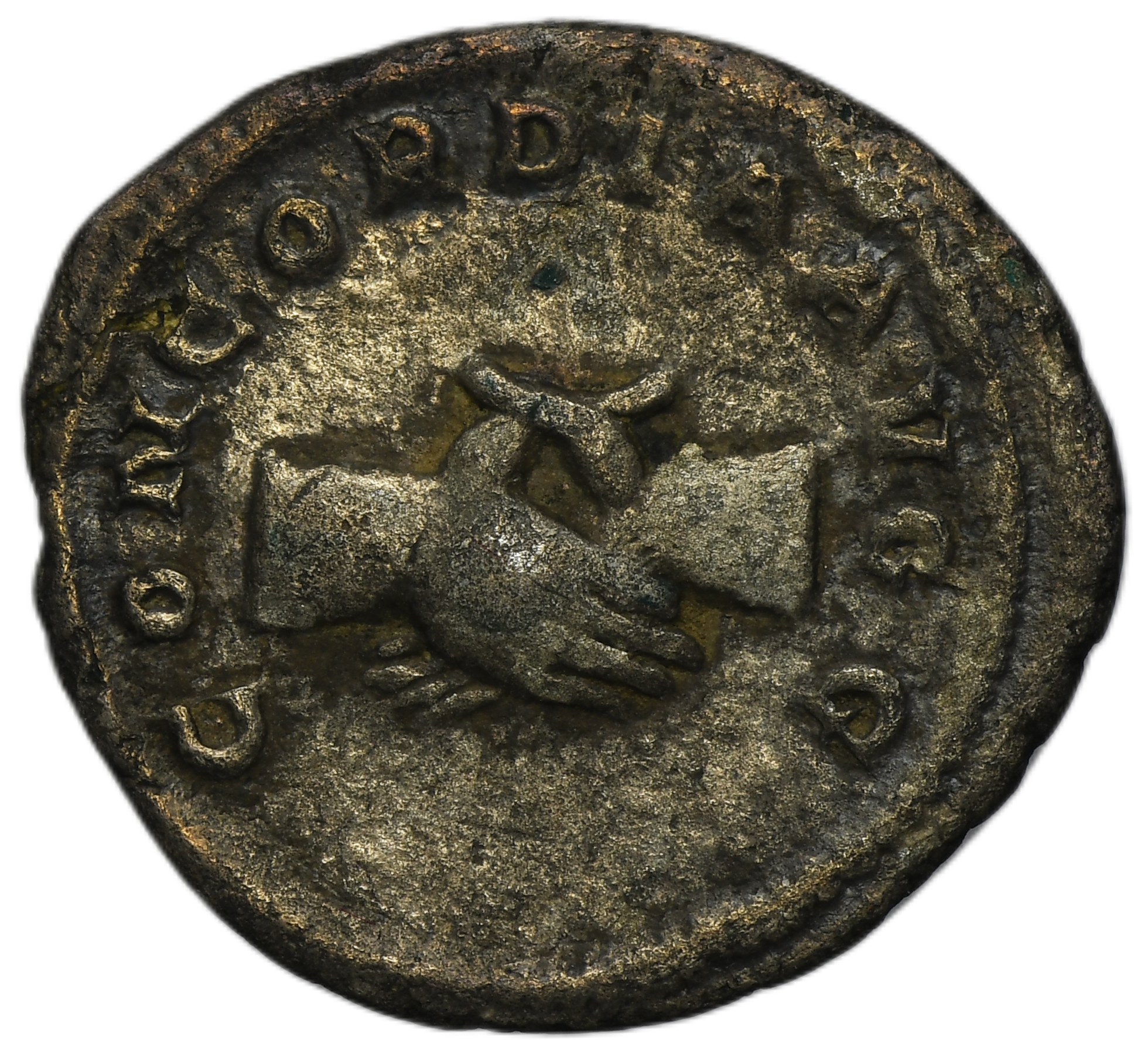
The depiction of two clasped hands, combined with the legend CONCORDIA AVGG, “Harmony of the Augusti”, symbolized concord between Balbinus and Pupienus. The clasping of right hands, known in Roman iconography as dextrarum iunctio, was a recognizable symbol of agreement, unity and shared interests.
Particularly significant is the plural AVGG, referring to the two equal Augusti. Coinage was one of the principal means of presenting their joint rule as a coherent political system. The message of CONCORDIA therefore extended beyond the personal relationship between the two emperors, conveying the stability and unity of the supreme imperial authority.
This type complements other antoniniani of Balbinus and Pupienus featuring clasped hands accompanied by different legends emphasizing cooperation between the two rulers. On the present coin, the central concept is Concordia, one of the most traditional Roman political virtues, whose presence on coinage can be traced back to the Republican period.
A rare antoninian of Balbinus with the legend CONCORDIA AVGG and the symbolic gesture of dextrarum iunctio. An interesting type demonstrating how the traditional Roman concept of Concordia was employed to legitimize the unusual joint rule of two Augusti in AD 238.
Roman Imperial
Balbinus (238), Antoninianus 238, Rome mint
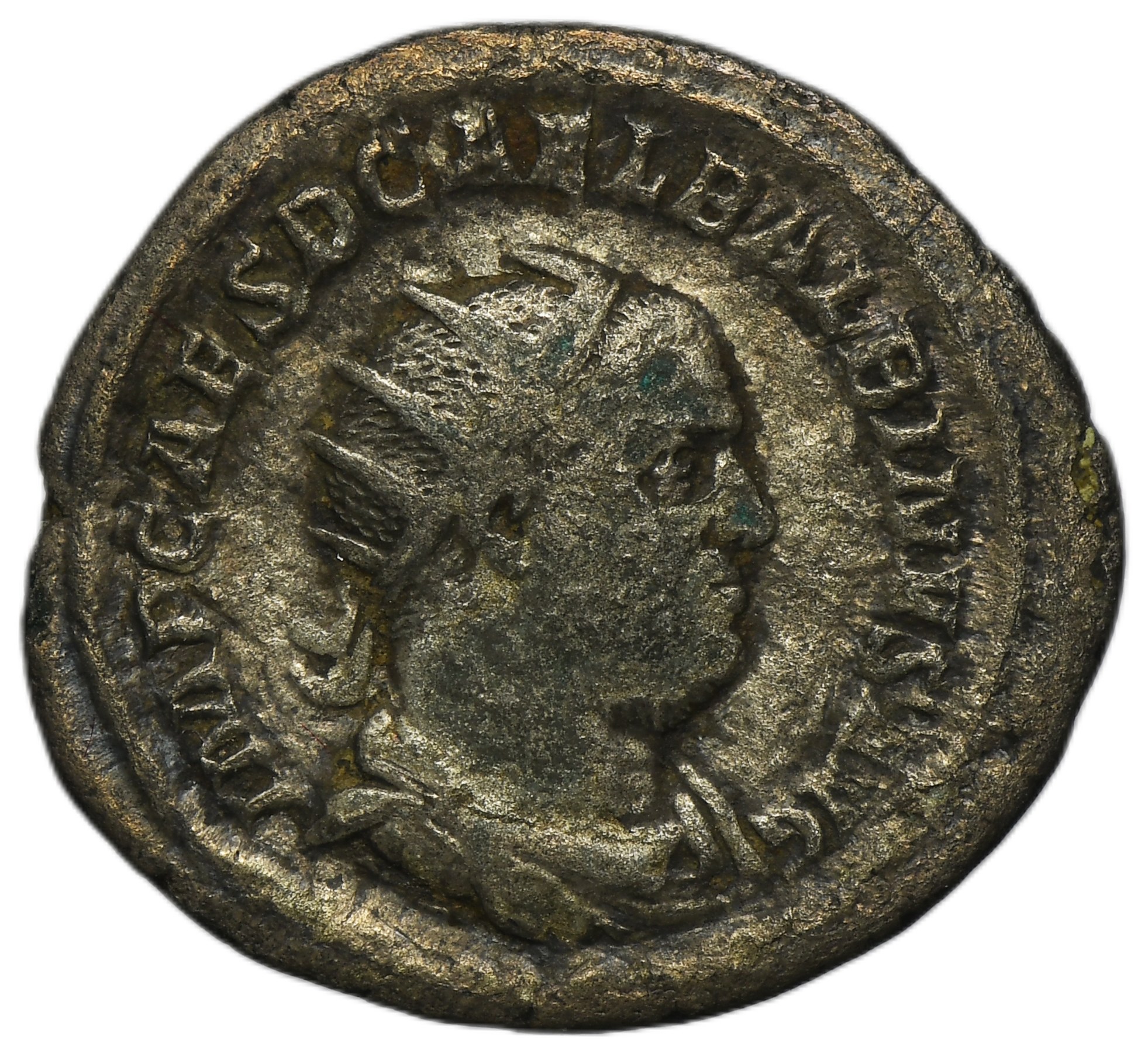
Obverse: bust of the emperor facing right
IMP CAES D CAEL BALBINVS AVG
Reverse: clasped right hands
CONCORDIA AVGG
Diameter 23 mm, weight 3.55 g